

Booming Games has spent the last few years quietly carving out a reputation for slots that respect their roots while still understanding how modern players actually play. From stripped-back classics to feature-forward series like Fish Tales, the studio has built a catalogue that values math clarity, pacing, and long-session feel over gimmicks.
In this Q&A, Bigwinboard sits down with Craig Asling, Director of Games at Booming Games, to talk about the studio’s creative DNA, how sequels are decided, where nostalgia still fits in 2026, and how volatility and player intent shape every new release. It’s a grounded look at how a slot studio thinks when it’s not chasing trends – but refining them.
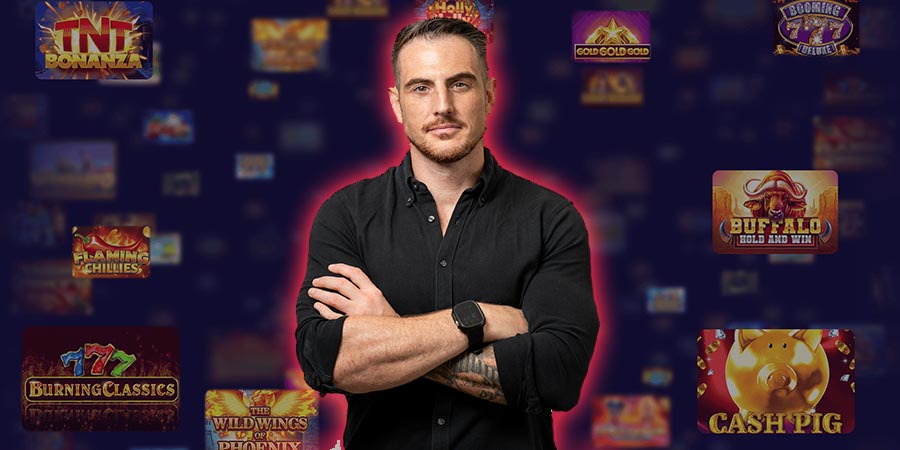
Bigwinboard (Daniel): You joined Booming Games as Director of Games in 2025. When you first came in, what did you see as the studio’s “core DNA” that had to be protected and built upon, and was there anything particular you wanted to introduce to the roadmap to raise the ceiling on future releases?
Craig Asling: When I joined Booming Games, the core DNA was immediately clear: strong math foundations, player-first gameplay, and a respect for slot heritage. There’s a confidence in Booming titles that comes from knowing exactly what kind of experience you’re delivering and not overengineering it. We take player proven mechanics and maths profiles and build upon them.
What I wanted to introduce was a longer-term roadmap mindset, thinking not just about the next release, but about feature families and series potential that could scale up over time, to truly build on the identity of Booming. That meant investing in prototyping, volatility profiling, and playerbase identification, so future games could be more intentional, more distinctive, and ultimately raise the ceiling on both creativity and performance.
Bigwinboard (Daniel): Booming’s catalogue has one foot in classic-inspired slots and the other in more feature-driven, modern formats. In practical terms, what does that mean day-to-day in your production process, and what are the non-negotiables you use to keep a “Booming feel” across games that play very differently?
Craig Asling: It means we’re constantly switching lenses. Some projects are about restraint, clean UI, simple feature sets, while others invite and require complexity, layered features, and deeper progression. You cannot create a game for everyone, there must be diversification in features, maths and visuals.
The non-negotiables are math clarity, intuitive features, and game pacing. No matter how feature rich or how stripped back a game is, it needs to feel readable and rewarding within seconds. The “Booming feel” comes from that balance: games that respect the player’s time, explain themselves through play rather than instructions, and deliver consistent satisfaction even when the mechanics differ.
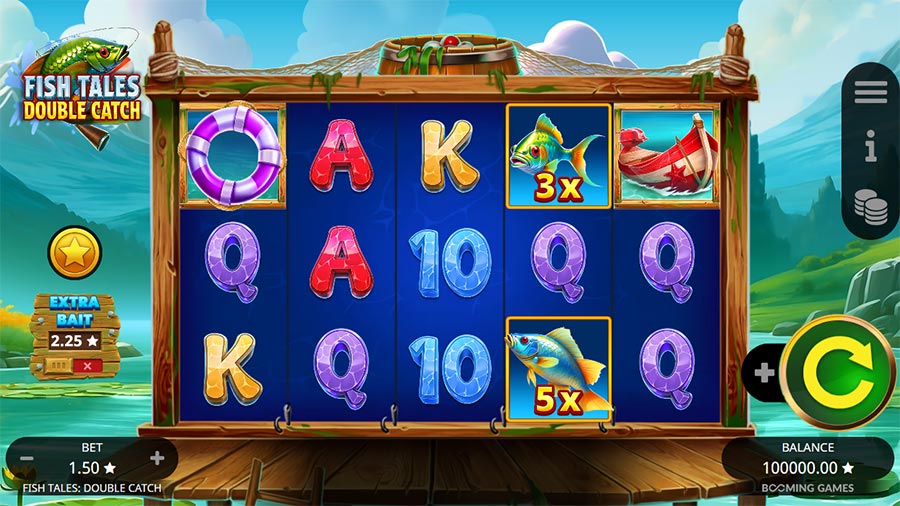
Bigwinboard (Daniel): The Fish Tales games have developed into a recognisable series for Booming. When you decide to revisit a Fish Tales game, or another game with a recurring theme, how do you judge whether it should be a true sequel versus a spin-off, and what specific player feedback or data points tell you “this is worth expanding” rather than leaving it as a one-off?
Craig Asling: The first question we ask is why players came back? Was it the theme, the core mechanics, the volatility profile, or a specific feature loop? If the answer is “the whole package,” that leans toward a true sequel. If one element clearly overperformed or stood out, that’s where a spin off or a smaller +1 makes more sense.
We are very data driven and look closely at player numbers; users, average bets, session length etc. Customer and player feedback is also crucial so we try and align that with solid performance data, that’s when we know a concept is worth expanding rather than leaving as a one off.
Bigwinboard (Daniel): Burning Classics shows the studio can still win when it comes to nostalgia. When you build a “classic” in 2026, what modern touches do you consider acceptable upgrades, and what changes do you avoid because they break that authentic, land-based-style players are actually looking for?
Craig Asling: Classics still remain one of our core game categories, because plain and simple, there is still a market for that. For our classics, we mostly focus on smaller quality of life improvements rather than reinventions. Cleaner animations, better sound design, subtle win celebrations, and smoother math curves are all acceptable.
What we avoid is feature overload, intrusive UI, or mechanics that interrupt the core loop. Players coming to a classic want familiarity, predictability, and control. If a change distracts from that or turns a classic into something you have to “learn,” it’s probably going too far.

Bigwinboard (Daniel): Players are getting more educated about volatility, feature frequency, and how a slot “feels” over long sessions. When you’re defining a new title, how deliberately do you target a specific player segment (chill grinders vs adrenaline hunters), and what do you do to ensure the game communicates its intent clearly within the first few minutes of play?
Craig Asling: We’re very deliberate about targeting. Early in concept, every game has a clear player profile, whether it’s a softer grinder or a high volatility thrill seeker and that informs everything from win frequency to feature triggers.
Communication is the key here. Within the first few minutes, the game should show you what it’s about through win patterns, pacing, and audio/visual feedback. You shouldn’t need a paytable deep dive to understand whether a game is more chilled or intense, the player experience should make that obvious almost immediately.
Bigwinboard (Daniel): Booming has also experimented with star power through its partnership with legendary Brazilian footballer, Ronaldinho. From a developers perspective, do you think there’s a lot to be gained from working on these high-profile titles, and will branded content continue to have a future in Booming’s roadmap?
Craig Asling: From a design and development perspective, IP branded titles are challenging but rewarding. You’re working within a defined universe, but still need to deliver a great slot experience that stands on its own.
There’s definitely value when the brand aligns naturally with the game concept, as it did with Ronaldinho. Branded content will remain part of Booming’s roadmap, but always selectively. The brand should magnify the game, not replace solid mechanics or math. We continue to plan existing and new IP brands in our future releases, so watch this space for the next big announcement!

Bigwinboard (Daniel): If someone has never played a Booming Games title before, which one game would you point them to as the most accurate “gateway” to your studio’s identity, and what should players look out for from Booming in the coming months?
Craig Asling: If I had to pick one gateway title, I’d probably choose Buffalo Extreme Hold and Win Extreme 10,000; a game that reflects Booming’s balance of strong fundamentals and modern execution. A game that offers something that’s immediately accessible but still has depth once you spend time with it. It encompasses a mix of clarity, pacing, and personality that really defines the Booming identity.
Looking ahead, players can expect more series development in the Fish Tales and Buffalo series with Fish Tales Colossal Catch: Link & Loot and Ultra Buffalo Hold and Win, two games in which we are eager to see launch. Additionally to this our roadmap is packed with some brand new exciting games with bold visuals, new features and mechanics while still focused on refining rather than reinventing- building titles that feel confident, coherent, and above all else…Booming