
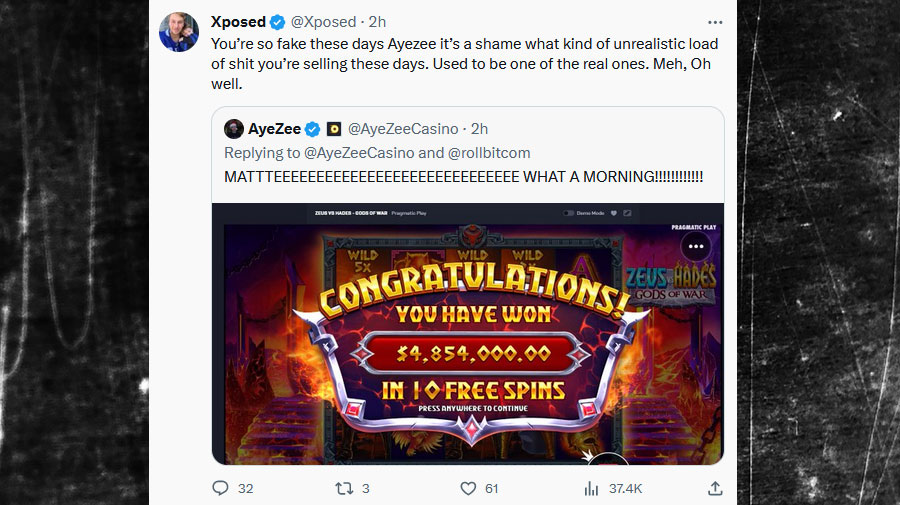
The online streaming and gambling community has often been shrouded in suspicion and controversy, notably the skepticism around the authenticity of streamers’ funds and the opaque nature of their alliances with gambling platforms.
A recent Twitter argument between two notable streamers, Xposed and AyeZee, both reputedly associated with crypto casinos recurrently suspected by the gambling community of supplying streamers with non-withdrawable or sponsored funds, has catapulted this discourse into the limelight once again.
Xposed and AyeZee, well-acquainted faces in the slot streaming domain, have recently spiraled into a dispute, accusing each other of being dishonest about the money they gamble with. With affiliations to crypto casinos Stake and Rollbit respectively, they have engaged in a bitter social media spat, throwing around allegations and spawning reactions from the community.
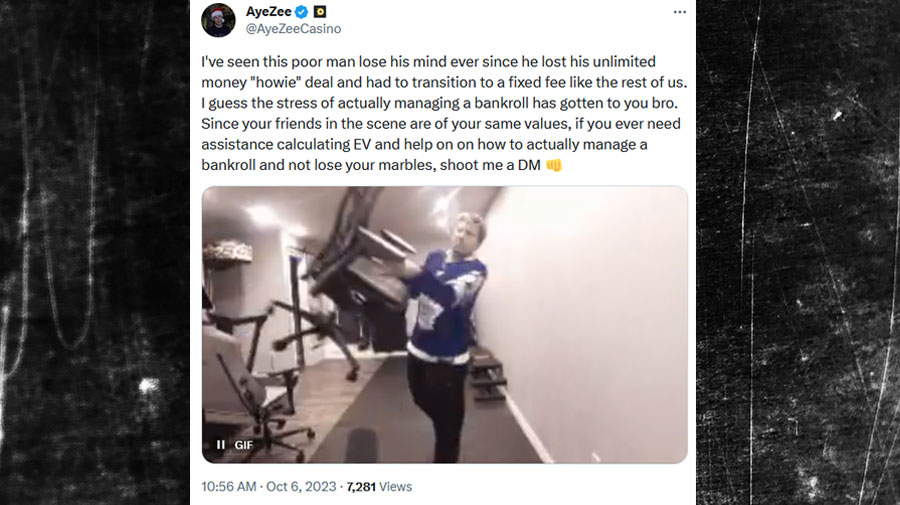
Xposed, who previously streamed for Roobet, accused AyeZee of faking his financial capacity and projecting a sham reality, alleging that the type of monetary losses AyeZee showed in his videos were “statistically impossible” unless backed by a lofty private fortune or financial backing from the casino. On the flip side, AyeZee mocked Xposed for losing his “unlimited money” deal and posited that managing a real bankroll was proving stressful for him.
This exchange, while seemingly a personal skirmish, raises foundational questions about the integrity and authenticity of the entire streaming community. Allegations of fakery, utilizing non-withdrawable funds, or even circulating sponsored money expose a potential dark side to gambling streaming, which could potentially mislead viewers into a false perception of gambling and wins.

The altercation between Xposed and AyeZee places a magnifying glass upon the broad ethics within online gambling. These notable figures, while maintaining their unique following, have consistently sparked debates regarding authenticity and relatability within certain spectator circles. Xposed’s explanation of his past ‘infinite refill’ deal, framed within a context of transparency and honesty, adds another layer to the ongoing ethical discussion. A prevailing question remains: How should the gambling community perceive streamers using sponsored money, in comparison to those who stake their own?
For an audience that often perches on the edge of their seats, cheering on colossal bets and empathizing with losses, how does this imbroglio reshape their perception? The erosion of trust and the potential warping of expectations around gambling is a profound consequence that stems from such public disputes.

The dispute between Xposed and AyeZee is ongoing, with potential implications for the streaming and online gambling community looming. This incident transcends a mere exchange of words, shedding light on the plausible complexities inherent in gambling streaming. It’s uncertain whether regulatory bodies will eventually intervene or if platforms will intensify their examination of streamer legitimacy. Regardless, the conversation surrounding transparency, authenticity, and ethics in streaming has received a notable boost.