

- A class-action lawsuit recently filed in federal court in Nevada accuses the widely popular Wheel of Fortune slot machines of misleading casino players and allegedly “cheating” them out of their money.
- The central issue raised by the plaintiffs involves the slot’s bonus wheel feature, which is modeled after the iconic game-show wheel. The lawsuit claims the game misleads players into believing they have an equal chance of landing on any prize segment, presenting the wheel as though it operates like a physical roulette wheel.
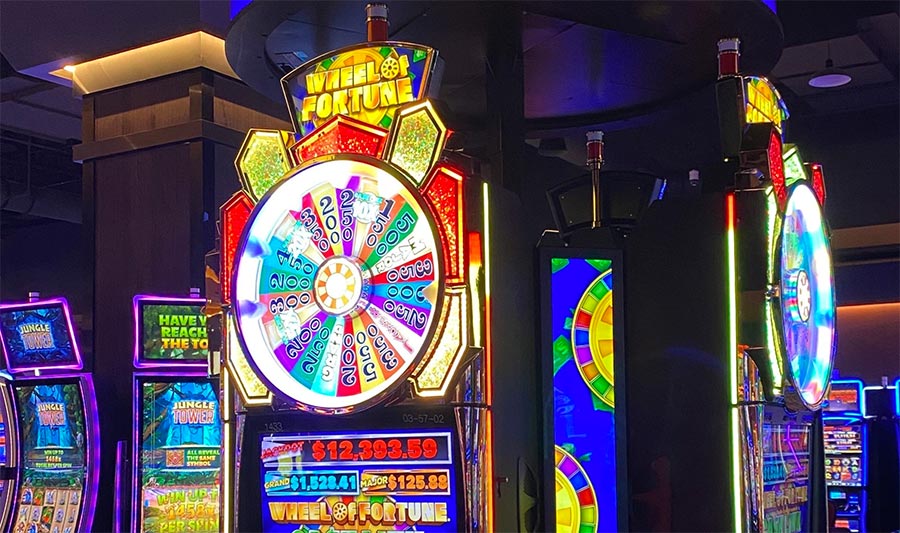
However, the lawsuit argues that this perception is deceptive, alleging that the results of the bonus wheel are pre-determined by internal software rather than being governed by random chance or the laws of physics.
“The wheel is not determined by physical mechanics,” the lawsuit states. “Instead, an internal computer program ensures it lands on segments with smaller monetary values more often.”
The complaint goes so far as to compare the setup to a “rigged roulette wheel,” suggesting a modern equivalent of tampering with probabilities to favour the house.
Claims of Misleading Branding
The lawsuit, initiated by four former players, targets slot machine manufacturer IGT and major casino operators such as MGM Resorts, Bally’s Corporation, and Penn Entertainment.
The plaintiffs also claim that the branding of the game, which borrows heavily from the television show Wheel of Fortune, reinforces the perception that players are engaging with a fair and chance-based game. According to the complaint, this creates a “false association” between the fairness of the TV show’s wheel and the programmed nature of the slot’s bonus wheel.
The plaintiffs are seeking financial compensation for themselves and potentially all players of Wheel of Fortune slots at the implicated casinos. Additionally, they are asking for a court order to stop the defendants from continuing to operate the allegedly deceptive games.
RNG Mechanics and Regulatory Oversight
Modern slot machines like Wheel of Fortune use random number generators (RNGs) to determine outcomes, including bonus features. While players might assume all segments of the wheel have equal odds, the reality is more nuanced. Each prize has specific odds assigned, with lower payouts appearing more frequently than larger jackpots.
For example, on a wheel with 24 segments, the chances of hitting the top prize might not be 1 in 24 but closer to 1 in 500 or more. These odds are carefully calibrated by the RNG to comply with each game’s predetermined return-to-player (RTP) percentage.
The lawsuit also faces challenges from the regulatory side. Slot machines in Nevada, including the Wheel of Fortune series, undergo rigorous testing by state regulators to ensure compliance with local laws. The Nevada Gaming Commission (NGC) oversees these processes, and casinos cannot adjust the RTP without official approval.
Given that Nevada regulators have consistently approved the mechanics of Wheel of Fortune slots over the years, the lawsuit may struggle to prove its claims in court. Federal judges often defer to state gaming laws, and the lawsuit could face significant hurdles in establishing that the machines violate any existing regulations.
Potential Legal Challenges
While the lawsuit raises concerns about transparency and player expectations, experts believe the plaintiffs will have a tough time convincing the court. Regulators have long recognized that slot machines operate on programmed probabilities, which are deemed fair as long as all players face the same odds.
Ultimately, the legal argument may fall short, leaving this lawsuit with limited traction to move forward.